The Keepsake Box and the Changing Idea of a Personal Collection
A keepsake box can preserve a personal collection’s stories with clear labels, suitable storage, and thoughtful choices about what to keep close.
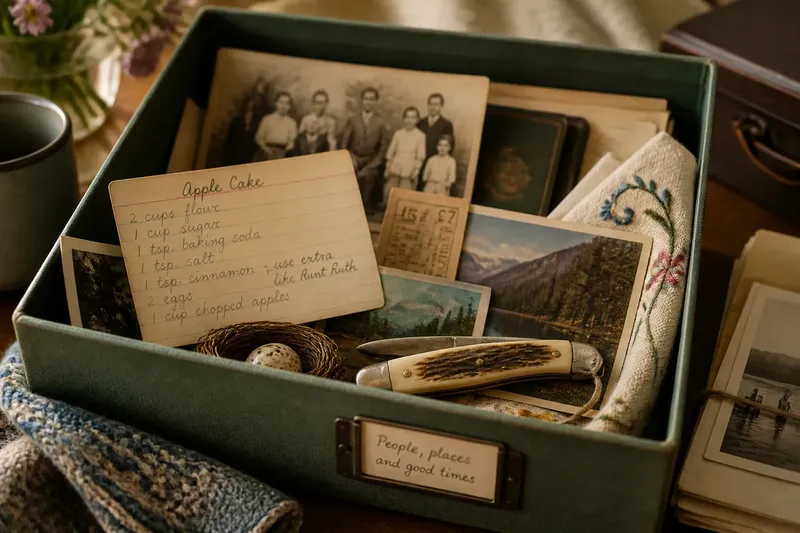
A recipe card slips from a cookbook, and its penciled note brings back the relative who always added extra cinnamon. A keepsake box can hold that memory alongside a few objects that still matter, without requiring someone to keep every item they have saved.
A collection can change without losing its story
People often begin collecting without a plan. Ticket stubs gather in a drawer; postcards, shells, matchbooks, or family photographs arrive one by one. Later, the collection may feel less like an active hobby and more like a record of a particular season of life.
That change does not make the earlier collecting pointless. It may simply alter the collection’s purpose. Instead of keeping every item from a trip, a person might keep the postcard that captures a favorite view and a note about who was there.
Try naming the collection’s present purpose in ordinary language: “These remind me of the people I cooked with,” or “I kept these because I liked noticing birds on walks.” A plain sentence can help distinguish the objects that still carry meaning from those that remain only through habit.
The purpose can change more than once. A set of school drawings might first be a parent’s record of a child’s growth, then a family conversation starter, and eventually a handful of pieces chosen by the grown child. There is no need to decide that one purpose is more legitimate than another.
Choose for the story, not for completeness
Completing a set can be satisfying, but completeness is only one reason to keep things. If the goal is to preserve a personal story, one representative item may do more than a full run of similar objects.
Consider what an item can tell a future viewer. Does it identify a person, place, shared activity, or turning point? Does its wear show how it was used? Does it prompt a story that would otherwise be hard to recall? An item need not answer every question, but a clear connection makes it easier to explain why it belongs.
Imagine sorting a drawer of travel souvenirs to remember a long-running friendship, not every stop on the trip. Keep a handwritten note from the friend, add the town name and a brief memory on archival paper, and set aside several nearly identical souvenirs. The resulting group is smaller, and a visitor can understand its story without hearing a full itinerary.
That does not mean keeping the most polished object. A chipped mug may carry a better story than an expensive souvenir; a faded program may matter because it names the people who attended. Choose for meaning and context rather than resale appeal or display value.
Give each saved object a useful context
Objects are easier to understand when their stories travel with them. A label can record a name, a place, an approximate occasion, or the reason the object was kept. Keep it short enough to read without handling everything in the box.
Use an acid-free card or archival-quality paper slip beside a photograph, ticket, or small paper keepsake. For a family photograph, note the names from left to right if they are known, plus the setting or occasion. Avoid writing directly on a fragile original; if identification needs to go on the back, use an appropriate archival method and ask a conservator about valuable or delicate materials.
A memory does not have to be a polished anecdote. “Dad carried this pocketknife on fishing trips with Lena” is more useful than “old knife,” even if the exact year is unknown. Mark uncertainty plainly rather than guessing: “possibly the lake near Aunt Jo’s house” leaves room for correction.
For a larger collection, keep a simple index on paper or in a digital note. Record a brief description and where the item is stored, not a long inventory of every detail. A family member looking for a particular photograph can then find the right box without opening each container.
Choose storage for the materials inside
A container that works for one kind of keepsake may not suit another. Before choosing a box, identify what it will hold: paper and photographs, fabric, metal, wood, or a mix. Consider whether any item needs to lie flat, avoid pressure, stay separate from other materials, or remain accessible for regular handling.
For photographs and paper, use suitable archival-quality sleeves or folders and avoid crowding that bends corners or presses on the contents. Keep small objects from rubbing together with appropriate wrapping or separate compartments. For delicate, valuable, or unusual items, follow the maker’s care instructions or ask a qualified conservator about suitable materials and conditions.
Store the box somewhere dry and relatively stable, away from direct sunlight, damp basements, and hot spots such as a radiator shelf. A clear outside label can identify the broad contents without exposing private details. If a collection contains materials with different care needs, use separate, appropriate containers rather than treating one box as suitable for everything.
Make access part of the design. A container placed on a reachable shelf, with a manageable weight and an easy-to-lift lid, is more likely to be opened and shared. If lifting or bending is difficult, use a smaller container for frequently revisited items and keep less frequently used material in a separate place that is still easy to locate.
What is not worth the effort? Buying elaborate matching containers before deciding what the collection means. A plain, appropriate container and a clear label are enough to begin; the story matters more than a coordinated display.
Decide what to do with duplicates and uncertain items
Duplicates are not automatically clutter. Two copies may belong to different people, or one may be a useful stand-in for a fragile original. Keep both when each has a distinct role, and note that role so a later sorter does not mistake one for an accident.
When several items tell nearly the same story, select the one that is easiest to identify, handle, or explain. If the choice feels premature, put the undecided pieces in a labeled “review later” folder. Revisit them when the collection’s purpose is clearer rather than forcing a decision during a tiring afternoon.
Some objects need a different route than the keepsake box. A family document may belong with important records; a sharp, leaking, or otherwise unsafe item should not be stored casually; and a fragile heirloom may need specialist care. Keep the collection focused on objects that can be stored and revisited appropriately.
Before giving an item away, ask whether someone else in the family has a specific connection to it. Offer the object with its story, not just a request to take it. If no one wants the original, a photograph and a short written account may preserve the memory without keeping the object indefinitely.
Questions about keepsake boxes
What belongs in a keepsake box?
Choose objects that carry a personal story and can be stored safely with the other contents, such as a labeled photograph, a letter, or one small souvenir. Keep documents that need regular access and materials requiring special care elsewhere.
How do I choose between similar keepsakes?
Compare what each item contributes: a name, a place, a relationship, a distinctive memory, or a practical role in the collection. Keep the one that is easiest to identify and explain unless the other has a separate story worth preserving.
What if I do not know the story behind an object?
Write down what is known and mark guesses as uncertain. Ask relatives who may recognize it, but avoid presenting an unconfirmed memory as fact; a short note saying “origin unknown” is useful context, too.
Should a keepsake collection be shared with family?
Share it when the owner wants to, and let them decide what may be handled, photographed, or passed along. A conversation can begin with one object and its story rather than an expectation that someone else take responsibility for the whole collection.
Let the collection reflect the person now
A personal collection need not remain a record of every interest a person once had. It can become a smaller, clearer expression of what they want remembered, shared, or kept close. The box is a container, not a contract to preserve every object forever.
For the next item you handle, write one sentence about why it matters and consider who might understand that sentence later. That note can make the keepsake box easier for someone else to revisit while keeping the meaning in the owner’s own words.