Ask Before Rearranging Someone Else’s Home
Ask before rearranging someone else’s home to offer useful help while preserving familiar routines, meaningful belongings, and the resident’s control.

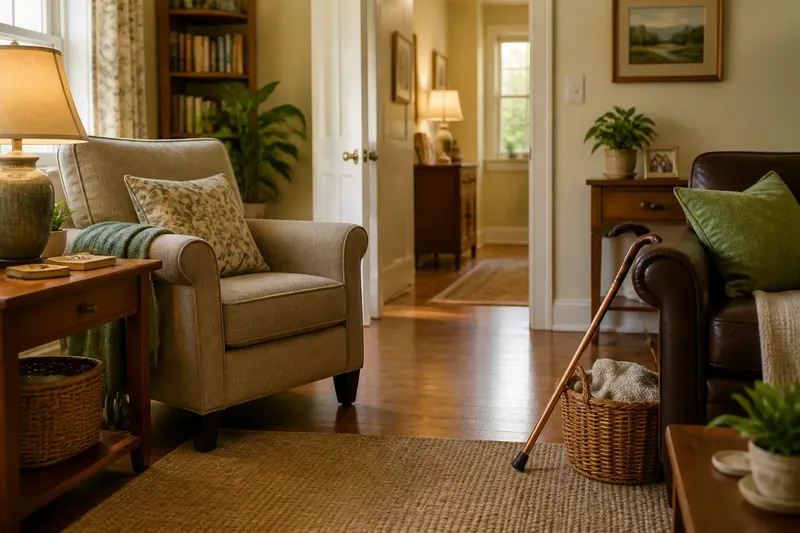
Mara arrived at her father Len’s apartment with soup and a free afternoon. Mail sat beside his armchair, a lamp was partly hidden by a plant, and small objects crowded the side table. She wanted to clear the surface and move the lamp, but asked Len what would make the visit useful before touching anything.
That question kept the visit focused on what Len wanted, not what looked wrong to Mara. Before rearranging someone else’s home, ask what—if anything—the resident wants changed. A visitor’s idea of tidy or convenient may not match the person’s routines or priorities.
Ask what would make the visit useful
Mara asked Len whether he wanted company, help with a particular task, or time to talk. He chose help sorting the mail and asked her to leave the side table alone. He knew what each object was and liked having them there.
His answer gave Mara a clear task and a clear boundary. A home can look disorderly to a visitor while remaining familiar and meaningful to its resident.
Make one specific offer and leave room for no. “Would you like me to carry these papers to the desk?” is easier to answer than “Can I tidy up?” A broad offer can sound like permission for changes the resident never requested.
Describe a concern before offering a change
As they sorted, Mara noticed that Len leaned to reach mail near the edge of the table. She did not move the table or gather the papers into a folder. Instead, she described what she saw and asked whether the reach bothered him.
Len said it did, but wanted to choose where the mail went. They put the current envelopes in a spot he selected near his chair. He could reach them without leaning and still knew where to look.
Noticing a concern is not permission to act. Describe the specific issue, ask how the resident experiences it, and let them decide whether they want to try a change. If they agree, ask them to choose the location or direct the task.
Let the resident decide where belongings go
Belongings often have a logic a guest cannot see. A cup may stay near a particular chair because it is used there. Notes may be arranged in the order their owner plans to handle them. Moving something to a spot that seems more sensible can make it harder to find.
Len asked Mara to read some envelopes aloud while he chose which papers to keep close. He directed her to set a few aside and leave the rest in place. Mara followed his instructions instead of deciding which papers mattered.
Use the same approach with furniture. If a chair, lamp, or table seems inconvenient, ask before moving it. If the resident wants to consider a change, ask what they hope it will do—such as making a book easier to reach or clearing space for a meal—and let them choose whether and where to try it.
Accept a no and keep the offer focused
Len declined help with the side table. Mara accepted without bargaining, joking about the clutter, or turning it into a surprise project later. She asked whether he wanted the soup in the kitchen or beside his chair. He chose the chair.
A no to one task is not a no to company or to every other offer. The resident may prefer to manage that task alone, may not see it as a problem, or may not want to change it now. Offer another specific task or simply spend time together.
It is not worth making a room look more orderly just to relieve a visitor’s discomfort. That can create extra work and make familiar things harder to find. If you are concerned about an immediate hazard, explain the specific concern calmly and ask how the resident wants to address it. For a serious, urgent safety concern, seek appropriate outside help.
What should you ask before changing the room?
What if the resident says, “Just do whatever you think”?
Ask about one small, reversible change rather than treating that broad answer as permission to reorganize. Offer a specific item and ask where the resident would like it placed, then wait for a clear answer.
Should you move something that looks misplaced?
Ask where it belongs before touching it. If the resident wants it left alone, keep it where it is; familiar placement may matter more than a visitor’s idea of order.
What if a change seems necessary for safety?
Describe the specific concern and ask what adjustment the resident would accept. For medical, mobility, or serious home-safety questions, consult a qualified professional who can assess options for the person and home.
How can family members offer help without taking over?
Make one concrete offer, agree on what the resident wants done, and ask before expanding the task. Let the resident set the pace and decide what stays untouched.
Leave the home arranged by its resident
When Mara left, the mail Len had chosen to sort was in the place he had chosen, the side table was unchanged, and the soup was within reach. He had received help with a task he wanted done and kept control of the rest.
For a visit to someone who is ageing at home, begin by asking what would help today. The answer can be a shared task, company, or no change at all—and respecting that choice is part of offering useful support.