A First Conversation About Moving Starts with What Home Means
A first conversation about moving can reveal which routines, relationships, and comforts matter most, without turning uncertainty into a decision.

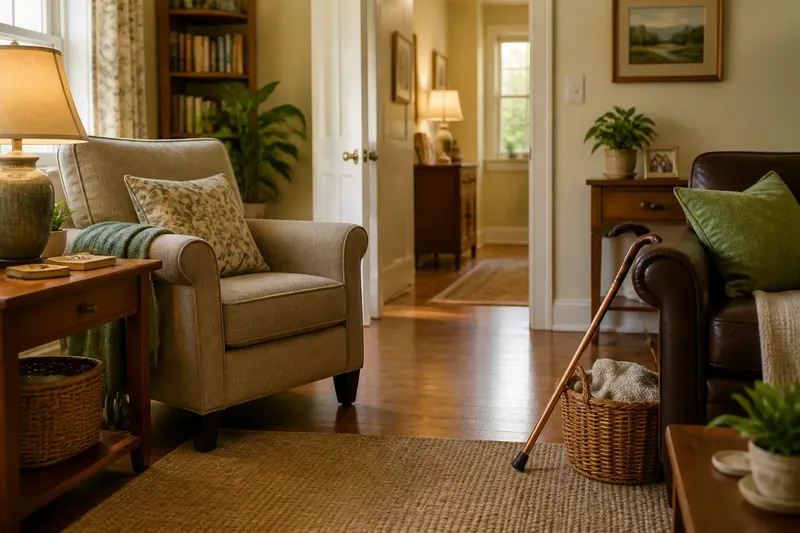
At the kitchen table, one person mentions a neighbor who moved closer to family. The other sets down a mug and says, “I don’t want to leave this place.” A first conversation about moving can start right there—not with a plan, but with what home means to each person.
Raising the possibility of a move does not mean a decision is due. It can be a way to understand what someone wants to preserve, what feels difficult, and what they have not yet considered. Keeping that distinction clear helps the conversation stay curious rather than turning into a debate about a destination.
Begin with the meaning of home, not a proposed address
“Would you move to an apartment near me?” is a question about a solution. It may be sensible to discuss later, but at the start it can make the other person feel that a choice has already been made. Try asking what makes the current home feel like theirs.
Listen for the concrete details behind the answer. Home might mean hearing the front gate click, watering pots beside a sunny window, knowing the bakery owner, or having space for a relative to stay. The same place can represent comfort to one person and burdensome upkeep to another.
Use open prompts, then leave room for an answer:
- “Which part of an ordinary day feels most like home to you?”
- “What would you miss if you lived somewhere else?”
- “Is there anything about the house or neighborhood that has become harder?”
- “What would you want to keep doing, wherever you lived?”
These questions invite a description, not a defense. Avoid arguing with a feeling or immediately proposing a fix. If someone says the garden matters, first learn whether they mean tending it, seeing it from the window, or sharing it with visitors.
Separate daily routines from the building around them
A home’s meaning often includes routines that happen to depend on its layout or location. Someone may value making breakfast at a familiar counter, walking to a nearby shop, or feeding a pet at the same time each evening. Naming the routine can make it easier to discuss what would need to continue after a change.
Ask what the activity gives the person: privacy, movement, a reason to get outdoors, contact with familiar faces, or a sense of competence. That answer is more useful than assuming a preferred room or neighborhood is the whole story. It also makes space for alternatives without presenting them as replacements that must be accepted.
Say you are talking with an older relative who loves tending a small vegetable patch but finds the rest of the yard tiring. If they explain that watching seedlings grow is the part they most want to keep, you can explore whether a smaller growing space would matter to them. The observable result of that conversation is a clearer priority—not a promise that the relative will move or that a particular option will work.
For another person, a routine may be difficult to imagine in a new setting. Do not rush to reassure them that everything can be recreated. Ask which parts feel essential and which they might be willing to change; uncertainty is useful information, not a problem to talk away.
Make room for mixed feelings and unequal priorities
People can want help with a difficult part of home life and still want to stay. Relief at having fewer chores can coexist with grief about leaving a familiar room. A conversation becomes more honest when neither feeling is treated as evidence that the other one is false.
Family members may also attach different meanings to the same place. One person may remember holiday meals; another may see repairs, travel, or worry. Each can speak about their own concerns, but a relative’s affection for the home should not be dismissed as stubbornness, and practical concerns should not be framed as selfishness.
Try reflecting what you heard before responding: “It sounds as if the garden matters because it gives you a reason to be outside.” Then ask whether you understood. This small pause can reveal a detail the first answer did not, and it gives the speaker a chance to correct your interpretation.
If emotions rise, suggest a break rather than pressing for a conclusion. You might say, “We can leave the options aside for now. I wanted to understand what you’d want to carry forward.” A calm ending is not a failed conversation; it can make it easier to speak again.
Agree on what the conversation is—and is not—for
Before comparing homes or discussing logistics, make the purpose explicit. You could agree that this talk is only about hopes and worries, that nobody is being asked to decide today, or that you are trying to understand what information would help later. Ask the other person whether that purpose feels right to them.
Keep questions specific and manageable. “What would you need to know before considering a move?” is easier to answer than “Where do you want to live for the rest of your life?” Someone may want to learn about transport, visitors, pets, privacy, or access to familiar services before considering any option.
It is not worth the effort to compare floor plans or collect brochures while the person is still trying to explain what matters. Information gathering can feel like pressure when there is no shared question to answer. First understand the concern; then decide together whether looking at options would be useful.
Where the right answer depends on a care need, a housing arrangement, a contract, or local rules, seek advice from a qualified professional before acting. For this first conversation, there is no need to settle those details.
What should you ask before discussing a move?
How do I bring up moving without pressuring someone?
Choose a quiet moment and say plainly that you are not asking for a decision. Ask whether they are willing to talk about what they want from home and accept a “not now” without turning it into an argument.
What if the person says they will never move?
Take the answer seriously and ask what they most want to protect. You can acknowledge that moving is not on the table for them today, then ask whether there are parts of home life they would like to make easier.
Should family members be part of the first conversation?
Ask the person whose home is being discussed whom they want involved. A private opening may help them speak freely; a later conversation with chosen relatives can bring in practical questions without making the first talk feel like a group decision.
How do we know when to talk again?
Ask what would make another conversation useful and whether the person wants to choose a time or wait until a particular question comes up. If they prefer to pause, respect that and avoid treating repeated prompts as a way to wear down resistance.
Close by reflecting priorities, not pitching a solution
Before you part, summarize what you heard in ordinary language: “You want to keep seeing your friends nearby, and you don’t want every weekend taken up by housework.” Invite corrections, then ask whether the person wants to note anything else. This creates a shared understanding without converting it into a verdict.
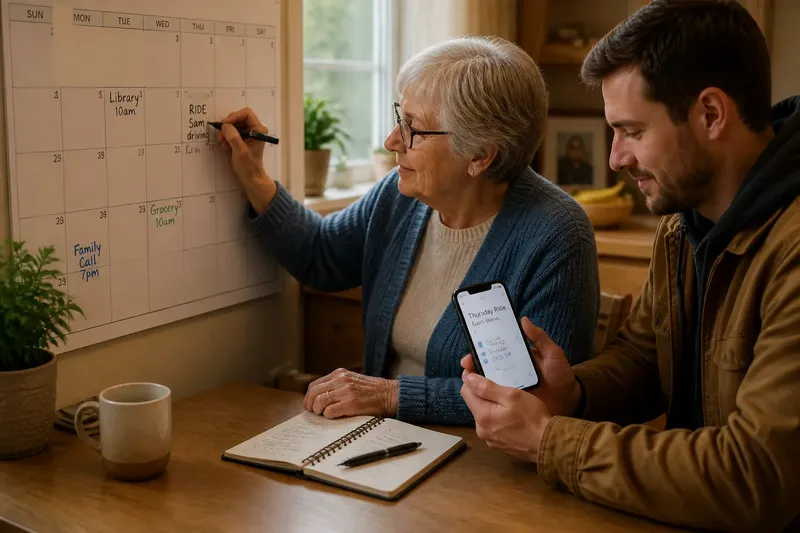
If they welcome it, write down a few priorities in their own words and keep the note accessible to them. It might say that the next place, if they ever consider one, should allow for privacy, familiar visits, and time outdoors. Treat it as a starting point for future thought, not a checklist they have already agreed to satisfy.
A first conversation about moving has done useful work when the person feels heard and both of you understand the question better. The next step may be another talk, a pause, or simply paying attention to which parts of daily life the person wants to protect. Let that choice belong to the person whose home is under discussion.